History of the Ikwerre People
Origins and Migration from Benin Kingdom
The Ikwerre people trace their ancestry to the great Benin Kingdom, specifically to Ogiso Idu Igodo, the founder of the Igodomigodo Empire in the 9th century AD. The majority of Ikwerre settlements have roots in the old Benin Empire, though some communities like Akpor have different origins.
The Story of Akalaka
Akalaka, a noble general and member of the Benin royal family, served as a trusted warrior in the royal palace during the reign of Oba Eweka. When the Oba rose to power through a violent coup against his brother Uwaifeokun, the kingdom descended into civil war. Suspicion fell upon several warriors, including Akalaka, who was accused of conspiracy.
Warned by his sister, who served among the women of the Oba's palace, Akalaka fled the kingdom around the 13th century with his brothers, kinsmen, and loyal followers. This marked one of the most significant migrations in Niger Delta history.
The Journey and Settlement
Akalaka's journey led him southward through forests and rivers:
1. Ndoni -His first refuge, where he took a second wife to seal friendship with the people
2. Following the Rivers - He traveled along the great River Niger and later the Arashi River
3. Erema - His final settlement, where he passed away in 1462 AD
The Three Sons and Their Kingdoms
From Akalaka's lineage came three proud peoples:
• Ekpeye People - Moved inland through the creeks and founded Ula Ubie
• Ogba People - Journeyed northward and established Ohiakwo
• Ikwerre People (Iwuruohna) - Crossed the Sombrero River and settled at Elele around 1538 AD
Elele: The Cradle of Ikwerre Nation
Elele Kingdom, traditionally known as "Ele Okini Ali" (meaning "the oldest land" or "the first place of abode"), was where the early Ikwerre ancestors first settled before spreading outward to establish towns, villages, and kingdoms across Ikwereland.
The Rumuamasi Declaration of 1965
This was a watershed moment in Ikwerre identity. Meeting in Rumuamasi under a promising new cultural organization, the Ikwerre people declared themselves as a distinct ethnic nationality, not Igbo, not Ijaw, but Ikwerre Iwuruohna.
This declaration led to:
• Reverting to original Ikwerre names for families, villages, communities, and landmarks
• Examples: Umuola to Rumuoro, Umukrushi to Rumuakwurusi
• Forceful assertion of their unique ethnic identity
The Identity Crisis
During colonial and post-colonial periods, the Ikwerre faced significant challenges:
• In 1913, Anglican Bishop Herbert Tugwell discovered that Union Igbo Bible translations were not easily understood by Ikwerre people, despite them being regarded as Igbo
• Igbo vernacular was compulsorily taught in all Ikwerre schools before the Nigerian Civil War
• This led to partial assimilation and what some called the "destruction" of the Ikwerre language
• Post-civil war period saw intensified debates about Ikwerre origins and identity
Geographic Spread
Today, the Ikwerre people occupy:
- Port Harcourt City
- Ikwerre Local Government Area
- Obio-Akpor Local Government Area
- Emohua Local Government Area of Rivers State
Ikwerre Culture
Language and Identity
Traditional Name: Iwuruohna
Language: Ikwerre language (distinct from Igbo, though there was historical assimilation)
Cultural Philosophy: The name "Iwuruohna" reflects their identity as "the face of the community"
Cultural Preservation Efforts
The Ikwerre people have made deliberate efforts to:
• Restore original Ikwerre names for communities and families
• Preserve their distinct language and cultural practices
• Document their unique history separate from neighboring ethnic groups
• Maintain cultural traditions that trace back to the Benin Kingdom
Relationship with Benin Kingdom
Cultural echoes connecting Ikwerre to ancient Benin include:
- The existence of Elele communities in both Ikwereland and Benin Kingdom (Edo State)
- Shared historical narratives and migration stories
- Cultural practices and traditions
- Recognition by Professor Tony Ogiamien (descendant of Ogiso Idu Igodo) that Ikwerre, Ekpeye, Ogba, Engenni, and others in the Niger Delta are descendants of Ogiso Idu Igodo
History of Ogbakor Ikwerre
The Birth of Ogbakor Ikwerre (1950s-1963)
The enthusiasm for Ikwerre cultural identity crystallized in the 1950s when ethnic awareness across Nigeria led to various socio-cultural organizations:
Early Organizations:
- Ikwerre Union - Led by Chief Jackson Mpi
- Ikwerre National Assembly - Led by Chief John Nsirim
- Ikwerre State Assembly - United effort with Chief Jackson Mpi as President,
Chief John Nsirim as Vice President, and Chief I.S. Onwuchekwa as Secretary
Founding Convention
July 7, 1963 - Isiokpo Meeting:
• Chief E.J.A. Oriji (Chairman, Ikwerre County Council) was informally made chair of subsequent meetings
• The name "Ogbakor Ikwerre" was adopted for the new organization
December 23, 1963 - First Convention:
• Held at Port Harcourt Municipal Council Hall
• Chief E.J.A. Oriji presided
First Executive Officers Elected:
President General: Barrister Nwobidike Nwanodi
1st Vice President: Chief E.J.A. Oriji
2nd Vice President: Prince John A. Nsirim
Secretary General: Mr. C.E. Okpara
1st Assistant S.G.: Mr. Sunday Paul
2nd Assistant S.G.: Mr. Ade Wosu
Treasurer: Mr. John Ohochuku
Publicity Secretary: Mr. E.A.D. Alikor
Past President Generals of Ogbakor Ikwerre
1. Barrister Nwobidike Nwanodi
2. Dr. Obi Wali
3. Barr. Richard Nwoka
4. Chief S.A.J. Nwachuku
5. Chief Orabule Adele
6. Chief S.I. Alete
7. Chief S.O.L. Amadinna
8. Chief Gideon Omodu
9. Captain Elechi Amadi
10. Prof. Otonti Nduka
11. Chief Sampson Agbaru
12. Prof. Augustine Onyeozu
13. Prof. Simeon Achinewhu
14. Prof. Emenike Wami
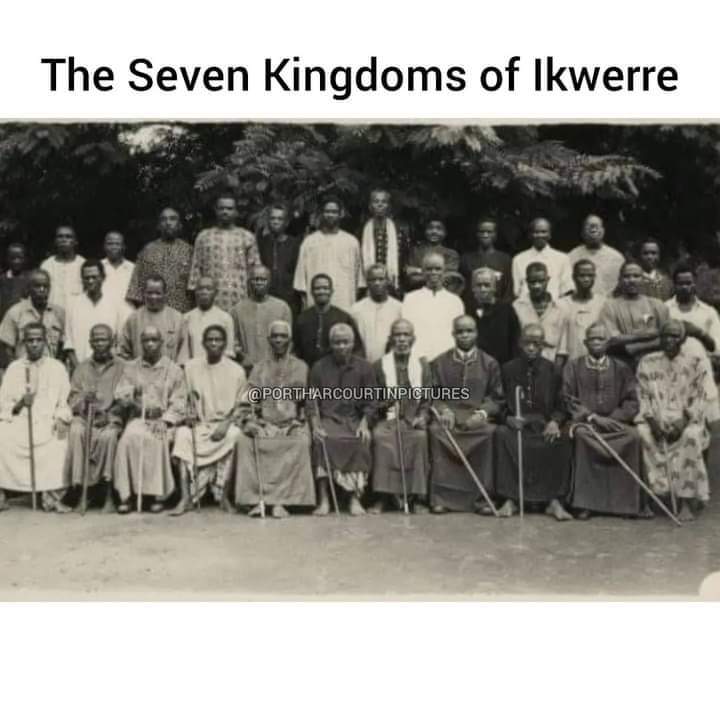
Strengthening, Fostering and renewal of relationships and cultural reflections for the challenges of sustainable development and improved socia-cultural services of the nationality.
To instill a sustainable drive for the preservation of Economy, Culture and Tradition of Ikwerre people
MOTTO:
UNITY, PEACE & PROGRESS

Conversation Secretariat Obiri Ikwerre,
East West Road, Alakaia Akpor,
P.O Box 11637
Port Harcourt, Nigeria

0806 461 9108

Monday-Friday (9:00 AM - 5:00 PM)
Saturday and Sunday: Off